Team First; A Superbubble?; Carbon Title; SF Rethinks Housing; Lessons for Angels; Service Titan; and more...
Week of September 19

“The team is the main thing”.
It’s been repeated so often that it’s easy to think of it as yet another tired cliche.
However, just because it’s trite doesn’t mean it isn’t true.
In angel and seed-stage investing, we’re looking for a team that can adapt and adjust with the twists and turns of the roller-coaster entrepreneurial life. Most of the projections from the original business plan will not hold up over the life of the startup. And I’m not just talking about the financial projections. The odds are high that the founders will need to adjust other aspects - the business model, target customers, go-to-market strategy, tech plans and more.
My personal experience - in my multiple entrepreneurial ventures, and from observing hundreds of entrepreneurs over the last twenty years - confirms that the team is drop-dead critical.
So what should we be looking for in the team? Among the attributes that matter are
a) Adaptability: Can they adjust and adapt to the inevitable zigs and zags of their startup career?
b) Resilience & perseverance: How committed are they, even when things get tough?
c) Drive, ambition & goal-orientation: Are they prepared to do what it takes to get the job done, regardless of how crappy/ boring/ tough/ unfair it is?
d) At least one or more specific "business" skill: Sales, marketing, finance, strategy etc.,, or a technical skill like software or engineering
There have been a lot of attempts to help companies in general (not just startups) recruit the "right persons" - some of it via methodologies like TopGrading or assessments (like DISC, Kolbe, StrengthsFinder etc.,), or via a more generalized approach, or via hiring experts like Geoff Smart.
Having tried some of these techniques, my takeaway is that there's no single silver bullet or magic wand - luck and chance play a big role, as does a subjective assessment. However, I do believe that these tools and techniques do help in recruitment and assessment of talent.
However, based on my observation, I haven’t come across any angel groups or seed-stage VCs that use a structured and detailed approach to evaluating the investee teams, which puzzles me.
Am I overthinking this? Or is there a genuine opportunity for us to improve our investment process?
Would love comments/ feedback on this topic from the Hamilton members.
Prashant
—------------------------------------
General VC/Macro:
Lessons for Angels During Market Turmoil, Ronald Weissman ACA Board Chair, (10):
Pressures Facing the Angel Group Model
New investment philosophies from GenZ: DAOs, crypto/web3, fast access
VC’s raising huge funds for the Seed stage, driving up valuations
Regulatory: SEC/Feds considering 7 motions that will limit Angel capital
2/3rds of all Seed deals eventually get funded by a VC. As a result, early-stage valuations have gone up 2.1x over the past 6 years - but have exits permanently doubled?
At least 7 “black swan” events have hit over the past 2 years, this has lead to a down market
We are now in a down market, and everything gets repriced - but the Seed stage lags by ~2 quarters
Public SaaS multiples have gone from 15.2x to 7.1x
66% of VCs have marked down in 2022
Ronald’s Advice:
Burn the 2021 and early 2022 playbooks: don’t do fast diligence, SAFEs, or growth at all costs.
Don’t get big fast - get profitable fast
Millennials and GenZ (new money managers) have never done this before…will need lots of handholding
Now is actually a great time to invest: valuations are down and “ego capital” is gone
-Summary by TJ Fleming
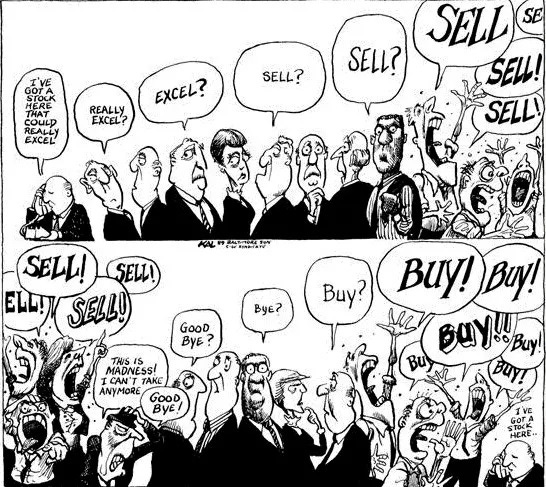
Are We At The Tail End Of A Superbubble?, Jeremy Grantham, (9):
Only a few market events in an investor’s career really matter, and among the most important of all are superbubbles. 85% of the time markets behave quite normally. It is only the other 15% of the time that matters, when investors get carried away and become irrational. This 15% is very different from ordinary bull and bear markets.
On August 16, 2022, the S&P had made back 58% of its losses since its June low. Grantham likens today’s market to the bear market rallies of:
November 1929 - April 1930, when the market rallied from the initial bottom
The 1973 summer rally after the initial decline
2000, when the NASDAQ recovered 60% of its initial losses in just 2 months.
The popping of these superbubbles takes multiple stages:
First, the bubble forms; second, a setback occurs and valuations take a half-step back. Third is the bear market rally. Fourth, and finally, fundamentals deteriorate and the market declines to a low.
The current superbubble features the most dangerous mix in modern times: all three major asset classes – housing, stocks, and bonds – were critically historically overvalued at the end of 2021. Additionally, we are seeing an inflation surge and rate shock.
Historically, major increases in gov. deficits have led to rising profit margins over the next few years, and major decreases in gov. deficits have led to falling profit margins. We have just seen one of the biggest decreases in the government deficit in history. It is very likely to be matched by a subsequent drop in corporate profits.
-Summary by TJ Fleming
Proptech:
ServiceTitan: The Unsung Unicorn, Inc, (8):
Ara Mahdessian and Vahe Kuzoyan' launched Service Titan, a software platform and mobile app that helps entrepreneurs in the service trades operate their businesses.
Mahdessian and Kuzoyan run ServiceTitan in a way that reflects both their status as immigrants and their status as West Coast tech entrepreneurs. The company offers competitive benefits, including unlimited personal time off, daily catered lunches, six weeks paid parental leave, and rewards to recognize high performers.
Great outcomes require taking great risks. This is why ServiceTitan's performance reviews can reflect negatively on those who don't fail at something, because it might mean they're too complacent.
The co-founders of ServiceTitan ask job candidates to articulate a challenge that they've weathered, because they understand that running a fast-growing startup is inherently high risk and comes with unrelenting challenges.
The company has experienced 1,437 percent growth in the past three years and booked $59.5 million in revenue last year.
-Summary by Rimjhim Khandelwal
Carbon Title: Decarbonization Blockchain Technology for Real Estate, Commercial Observer, (8):
Carbon Title has closed a seed round backed by lead investor GreenPoint Partners, along with Alpaca, Allegory, Ripple, and proptech investor Packy McCormick. It is being piloted by companies such as Hoffman Construction, Lease Crutcher Lewis, Killian Pacific, Corigin. Carbon Title also partners with carbon offset creators such as DroneSeed. The seed round amount raised is undisclosed.
Carbon Title launched its online platform to provide carbon transparency to the real estate value chain and the public in its push for carbon neutrality.
The platform will use blockchain technology to ensure that all emissions data from existing buildings and those under construction is easily accessible and searchable to the public.
In addition to the carbon calculations and maintaining these accounts, the platform also helps users find lower-carbon building materials and decide when to use them to reduce their emissions.
-Summary by Claire Hu
Housing:
The Fed Could Crash the Housing Market, CNN Business, CNN, (9):
Investors are worried that the Federal Reserve's aggressive interest rate hikes could damage the US economy. Higher mortgage rates could cause people to think twice about buying a home.
The Consumer Price Index rose 0.7% in August, the largest increase since 1991, and gave the Fed reason to continue to go hard at its policy meeting next week and beyond.
Some economists are noting weakness in the housing market starting to peek through, but the Fed must walk a careful line - a housing slowdown has preceded nine out of the past 12 recessions, and investors haven't forgotten America's catastrophic housing crisis in 2008.
Investors' perception of the outlook for the global economy remains bleak in September, according to a Bank of America survey published Tuesday. They are selling stocks and piling into cash, and expect corporate profits to soften and equities to continue to crash.
-Summary by Rimjhim Khandelwal
How San Francisco Makes It Insanely Hard to Build Housing, SF Standard, (8):
San Francisco remains one of the hardest places to build houses despite the tremendous market demand
San Francisco is on pace to build an anemic 3,000 new units this year, and state officials are now investigating the city's land-use practices.
San Francisco is an extremely expensive place to build (construction accounts for 59% of total project cost), and the city's political climate is driving many developers away.
The city's multitude of fees, costly labor mandates, and tortuously slow permitting process worry local builders.
The city's inclusionary housing fee requires developments larger than 10 units to include 20% to 33% below market-rate units or pay a hefty fee.
San Francisco's system of housing review, which gives both the Planning Commission and the Board of Supervisors discretion over housing approvals, is ripe for abuse.
Pro-housing groups say the city's "solutions" to the housing crisis are only making matters worse. Local politicians are launching a yearlong process to redesign an existing state law to avoid relinquishing their role in project approvals.
-Summary by Rimjhim Khandelwal & Zhi Zheng
Why Aren’t There Economies of Scale in Building Size?, Construction Physics, (7):
In general, large buildings aren’t much cheaper to build on a per-square foot basis than small buildings are. Here is the reason why,
Geometric effects: the vast majority of geometric effects on building size are diseconomies. Many of these diseconomies are the result of building taller. A building that just got larger horizontally would also face diseconomies (though fewer, and they might not apply to certain types of buildings such as industrial buildings).
Fixed effects: Fixed costs tend to increase as the building gets larger, including design costs, building permit fees, land cost, etc. Production methods also tend to have costs that increase in proportion to building size.
Learning curve effects: learning curve effects do seem to take place in some instances, especially if the building is very repetitive.
Volume discounts: volume discounts also do seem to exist at the level of the firm, though not necessarily the individual building. However, these discounts seem to be inconsistent.
Conclusion: Overall it seems like learning curve effects and volume discounts are doing most of the work for scale effects that do occur, but these are likely less than the negative cost impacts of increased size.
-Summary by Claire Hu
ESG/CleanTech/ClimateTech:
JPMorgan Product Reveals Wall Street’s Shifting Views on ESG, Bloomberg, (9):
ESG and the concept of double materiality are expanding their foothold in the US as JPMorgan teams up with software firm Datamaran to develop a tool analyzing ESG risks
Double materiality means the financial risk associated with ESG for any firm as well as the firm’s own ESG impact on the world
JPMorgan argues that double materiality is the only forward and comprehensive method for evaluating ESG impact
-Summary by ZhiZheng
Great Outlook for Renewable Energy Cost Curves, Joule, (8):
Decisions about how and when to decarbonize the global energy system are highly influenced by estimates of the likely cost.
Using empirically validated probabilistic forecasts of energy technology costs researchers at Oxford estimate future energy system costs under three scenarios: No Transition, Slow Transition, and Fast Transition
Findings: Compared to continuing with a fossil fuel-based system, a rapid green energy transition is likely to result in trillions of net savings (up to $12T) vs. a No Transition scenario
These savings forecasts are direct energy cost savings. They do not include potential additional savings from avoided climate related damages
-Summary by TJ Fleming